1. Introduction
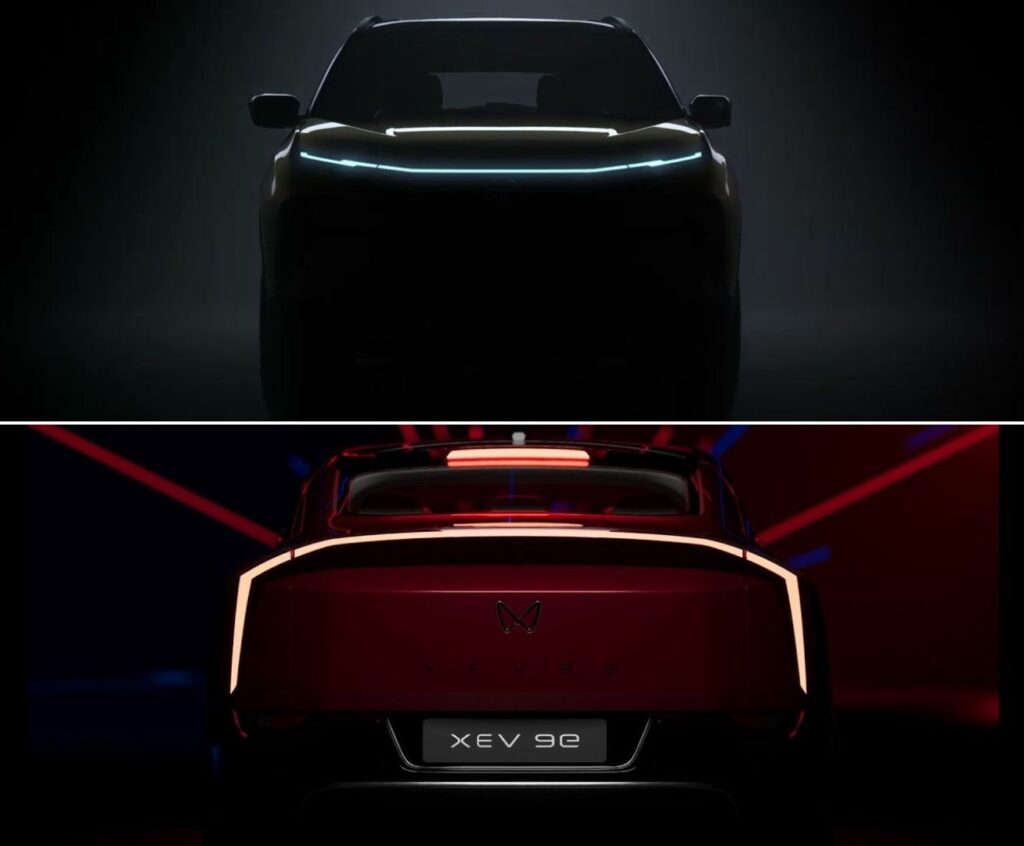
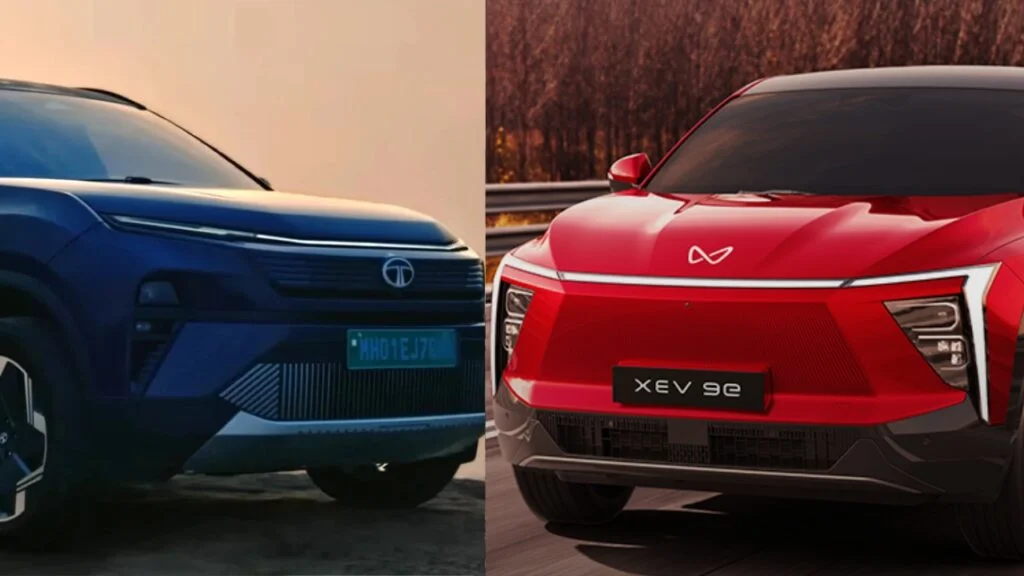
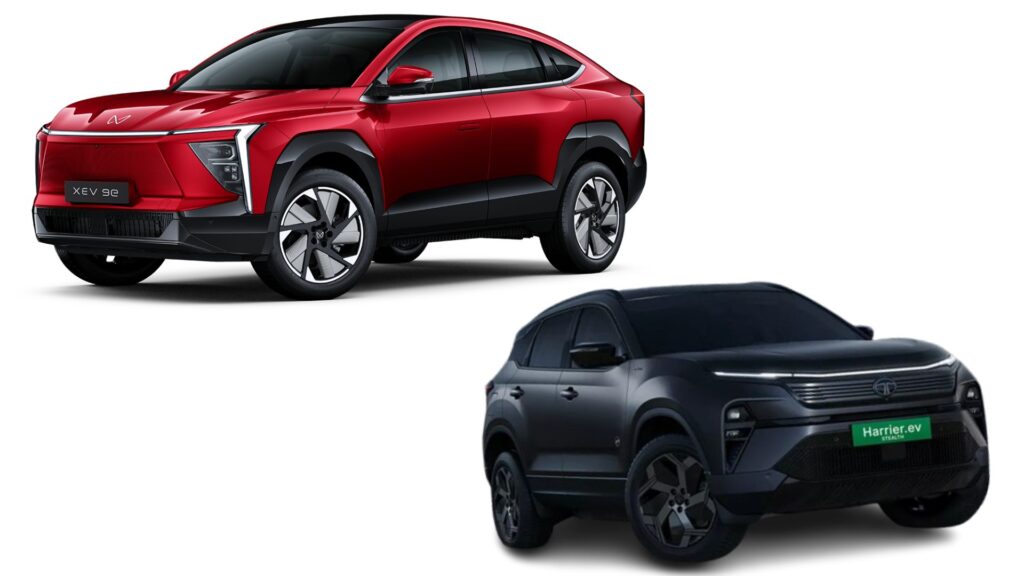
In India’s rapidly evolving electric vehicle (EV) landscape, the Tata Harrier EV and Mahindra XEV 9e (XUV.e9) stand out as flagship mid-size electric SUVs. This in-depth comparison explores their specifications, performance, design, technology, safety, range, pricing, and real-world usability.
2. Design & Dimensions
Tata Harrier EV:
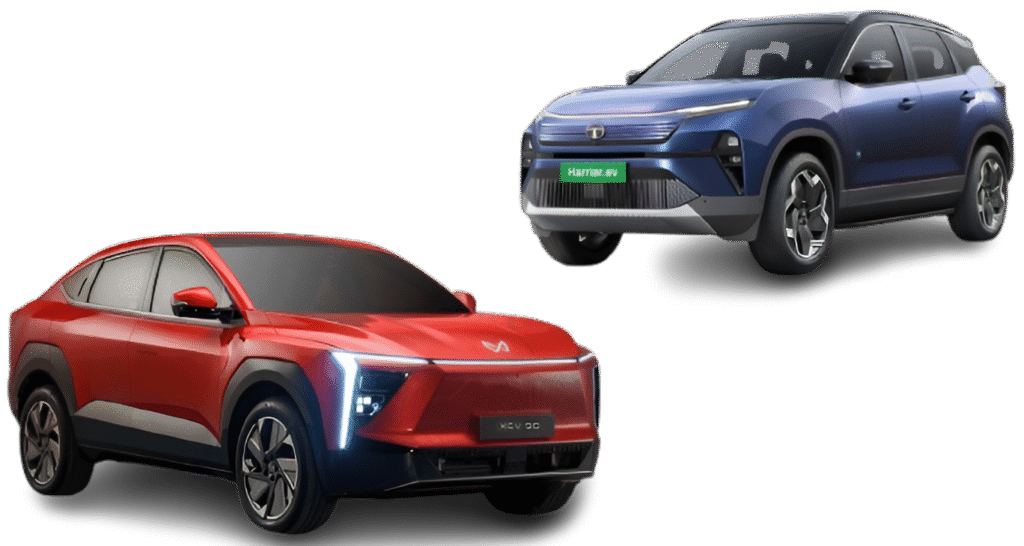
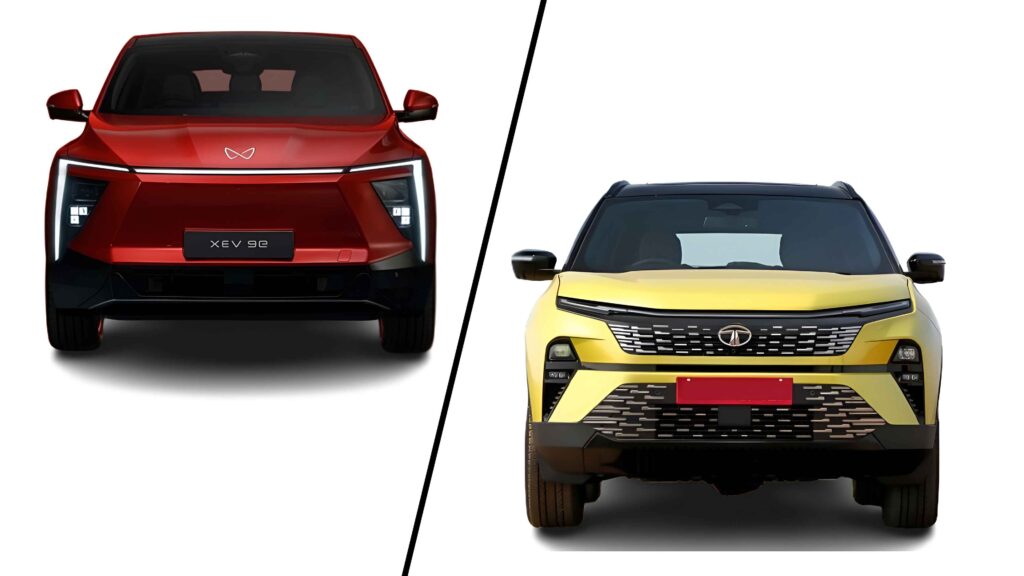
Retains the robust and muscular stance of its ICE counterpart, enhanced with EV-specific features such as a blanked-off grille, vertical slats, aerodynamic inserts, and aero-optimized alloy wheels.
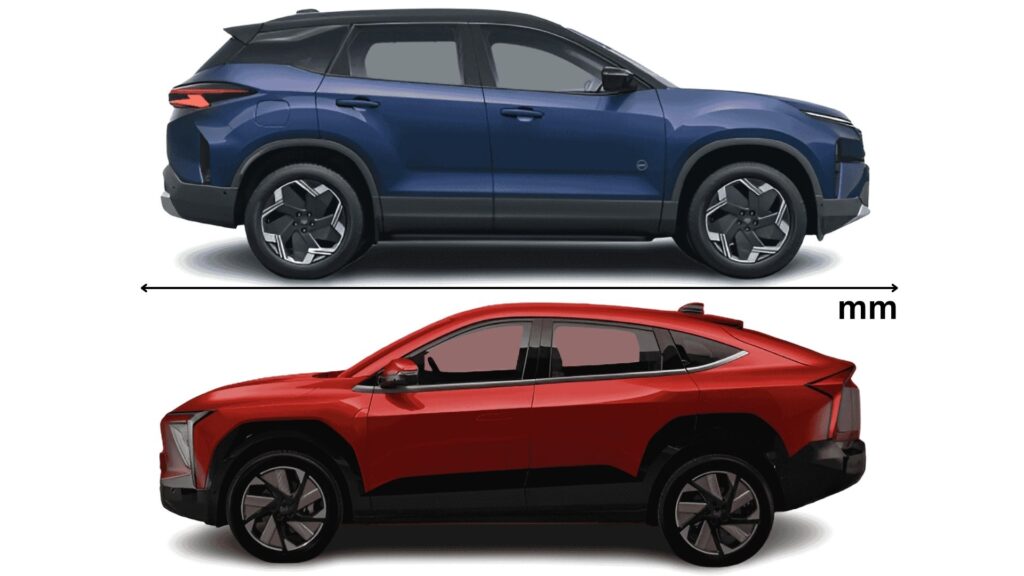
Dimensions: ~4,607 mm length, 2,132 mm width, 1,740 mm height with a 2,741 mm wheelbase.
Offers commanding presence and spaciousness.
Mahindra XEV 9e:
Showcases a futuristic, coupe-like silhouette with a sloping roofline, sleek fascia, connected LED taillights, and flush door handles.
Slightly longer with a length around 4,789 mm, width- 1,907 mm wheelbase of 2,775 mm, ideal for rear-seat comfort.
Its modern aesthetics appeal to those seeking design-forward EVs.
Verdict: Harrier EV offers a rugged, SUV-like appeal; XEV 9e leans toward a sleek, contemporary design with extra legroom.
3. Powertrain, Performance & Driving Dynamics
Tata Harrier EV:
Powered by dual motors (AWD on top trims): Front ~156 bhp, Rear ~235 bhp, with up to ~504 Nm torque.
Acceleration: 0–100 km/h in approx. 6.3 seconds.
Drive modes: Boost, Sport, City, Eco; RWD variants also available with slightly lower performance.
Demonstrated off-road capability in “Elephant Rock Challenge,” highlighting AWD’s ruggedness.
Mahindra XEV 9e:
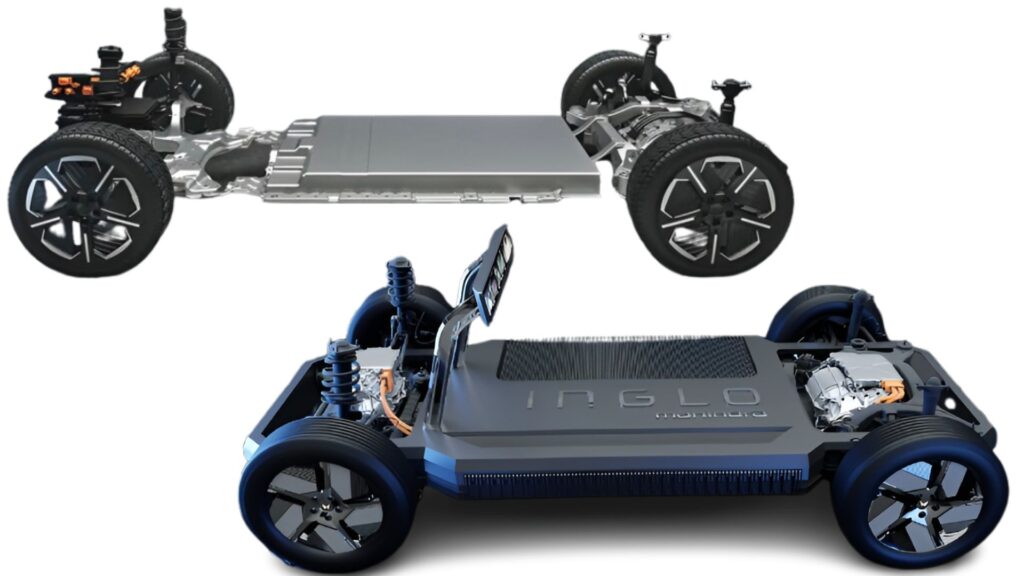
Engineered on the dedicated INGLO EV platform, offering balanced weight distribution and modular scalability.
Single-motor RWD: ~281–282 bhp and ~380 Nm torque on top variant; no AWD option.
Acceleration: Approximately 6.7–6.8 seconds (0–100 km/h).
Verdict: Harrier EV delivers superior traction and acceleration with its AWD dual-motor setup, while XEV 9e focuses on refined performance.
4. Battery Capacity, Range & Charging
Tata Harrier EV:
Offers 65 kWh and 75 kWh LFP battery options.
Claimed range: Up to ~627 km (MIDC); real-world combined range ~401 km (city ~409 km; highway ~393 km).
AC charging (~7.2 kW): 10–10.7 hrs; DC fast charging (120 kW): 20–80% in ~25 minutes.
Mahindra XEV 9e:
Comes with 59 kWh and 79 kWh battery variants.
Claimed ARAI/MIDC range: ~542 km to ~656 km.
Real-world range advantage: ~456 km combined (city ~425 km; highway ~488 km).
AC charging: around 11.7 hrs; DC fast charging (180 kW): 20–80% in ~20 minutes.
5. Interior, Infotainment & Tech
Tata Harrier EV:
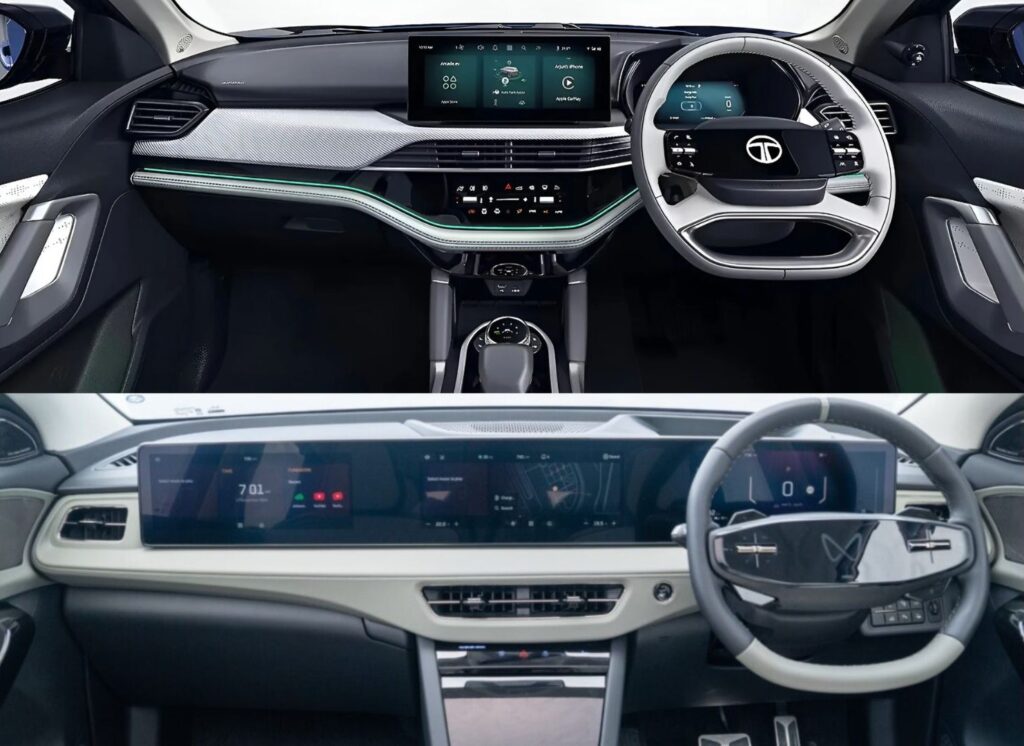
Cabin features a 14.5‑inch QLED touchscreen, 12.25‑inch instrument cluster.
Advanced features: 540° camera with Transparent Mode, virtual rearview mirror with dashcam, Summon Mode, Boss Mode, OTA updates via iRA, wireless charging, V2L/V2V capabilities.
Mahindra XEV 9e:
Features a futuristic triple-display setup: one for infotainment, one for cluster, and one for co-passenger.
Additional tech: AI voice assistant, ambient lighting, wireless charging, Type-C ports, premium leather seating, illuminated logos.
Verdict: Harrier EV emphasizes practicality blended with advanced, tug-of-war features. XEV 9e excels with its immersive digital layout and modern cabin tech.
6. Safety & ADAS
Tata Harrier EV:
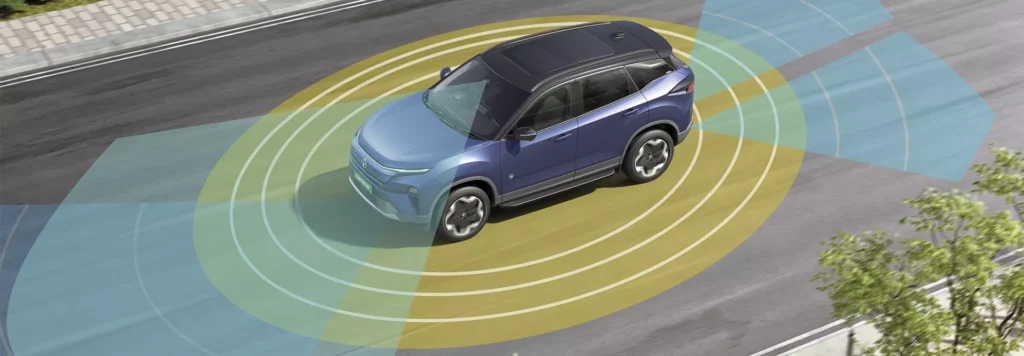
Equipped with Level 2 ADAS, 22 advanced safety features, 7 airbags including knee airbag, ESC with i-VBAC, AVAS, 540° camera, and other high-end offerings.
Achieved 5-star Bharat NCAP rating; full marks for adult occupant protection and high child occupant scores.
Mahindra XEV 9e:
Offers safety features like a 5-star crash test rating, illuminated logos; Level 2+ ADAS may be available (inherited from BE‑6 line), though specifics are less detailed.
Verdict: Harrier EV holds a strong safety edge with comprehensive, proven kit and crash rating. XEV 9e likely matches in structural safety but lacks full ADAS disclosure.
7. Pricing & Value Proposition
Tata Harrier EV:
RWD variants priced from ₹21.49 lakh to ₹27.49 lakh (ex-showroom, Delhi).
AWD (top) model starts around ₹28.99 lakh; Stealth Edition begins at ₹28.24 lakh.
Mahindra XEV 9e:
Price range: ₹21.90 lakh to ₹30.50 lakh (ex-showroom).
Verdict: Harrier EV offers a competitive price-to-feature balance, particularly with AWD trims. XEV 9e, though slightly pricier, justifies cost with design and range.
9. Summary Comparison Table
| Category | Tata Harrier EV | Mahindra XEV 9e |
|---|---|---|
| Design | Rugged, muscular SUV styling | Sleek, modern coupe‑SUV styling |
| Dimensions | Slightly wider, shorter wheelbase | Longer, better rear seating space |
| Platform | Gen2 EV (modified ICE architecture) | INGLO dedicated EV skateboard platform |
| Motor & Drivetrain | Dual motors AWD (or RWD) | Single motor RWD |
| Power & Torque | ~235 + 156 bhp; ~504 Nm | ~281 bhp; ~380 Nm |
| Acceleration (0–100 km/h) | ~6.3 seconds | ~6.7–6.8 seconds |
| Battery Options | 65 kWh, 75 kWh | 59 kWh, 79 kWh |
| Claimed Range | Up to ~627 km (MIDC) | Up to ~656 km |
| Real-World Range | ~401 km | ~456 km |
| AC Charging | ~10–10.7 hrs (7.2 kW) | ~11.7 hrs (7.2 kW) |
| DC Fast Charging | ~25 min (120 kW) | ~20 min (180 kW) |
| Infotainment & Tech | 2‑screen setup, Summon, Boss, 540° cam | Triple‑screen, ambient lighting, AI voice |
| Safety & ADAS | 5 stars Bharat NCAP, Level 2 ADAS | 5-star crash, Level 2+ ADAS (partial) |
| Price Range (ex‑showroom) | ₹21.5 – ₹29 lakh | ₹21.9 – ₹30.5 lakh |
| Real-World Feedback | Robust performance, trusted brand | Stylish but note early QC concerns |
11. Final Verdict
Who should buy Tata Harrier EV?
Buyers prioritizing ruggedness, AWD traction, advanced safety, and proven reliability.
Price-sensitive customers favoring value in premium trims and long-term support through Tata’s service ecosystem.
Who should consider Mahindra XEV 9e?
Design-conscious drivers wanting futuristic digital cabins, longer real-world range, and faster DC charging.
Tech-savvy users drawn to a platform built ground-up for EV performance and spacious rear seats.